

 Rings
Rings
 Earrings
 Bracelets & Bangles
 Necklaces & Pendants
 Silver Jewellery


 Our Story
 Diamond Buying Guide
 Watch Buying Guide
 Product Care & Aftercare
 Visit our Showroom
Sustainability in fine jewellery is often clouded by vague corporate language and unverified marketing slogans. For buyers investing in an engagement ring, a milestone timepiece, or a wedding band, understanding where precious raw materials originate has become just as critical as assessing carat weight or mechanical accuracy. Fine jewellery should carry lasting personal meaning, which collapses if the underlying supply chain conceals environmental destruction or exploited labour.
In July 2018, the independent family maison Chopard achieved a major operational objective by committing to 100 percent ethical gold across its entire watch and fine jewellery production. To understand what that commitment means at a practical level, you need to examine the mechanics of artisanal mining, chain-of-custody tracking, and in-house foundry alloying.
The Journey to Sustainable Luxury: Origins and Context
Gold mining historically presents severe ethical challenges. Artisanal and small-scale gold mining accounts for approximately 20 percent of the global gold supply while employing roughly 90 percent of the gold extraction workforce. Many unmonitored extraction sites rely on dangerous excavation conditions, direct child labour, funding for armed militias, and the extensive use of mercury and cyanide, which contaminate freshwater tables and surrounding soils.
In 2013, Chopard launched a multi-year framework named The Journey to Sustainable Luxury. Rather than buying carbon offsets or applying marketing labels to isolated capsule lines, Co-Presidents Caroline and Karl-Friedrich Scheufele partnered with environmental organisations like the Alliance for Responsible Mining (ARM). The goal was restructuring internal supply chains so every gram of newly acquired raw material could be traced directly to responsible sources.
Five years after introducing their first Fairmined gold collection at the Cannes Film Festival, the maison met its target in July 2018: every watch case, bracelet link, gem setting, and diamond capsule manufactured in their workshops uses verified ethical gold.
The Two Traceable Supply Streams
Chopard defines ethical gold as material acquired through two distinct, audited supply chains that meet international environmental and human rights criteria.
- Artisanal and Small-Scale Mines (ASM): Chopard sources directly from small mining cooperatives accredited by the Swiss Better Gold Association (SBGA) or certified under Fairmined and Fairtrade protocols. This gold comes from verified operations in South America, such as the Barequeros gold panners of El Chocó in Colombia. These cooperatives ban child labour, enforce strict worker safety standards, and limit or eliminate mercury usage during separation. Chopard pays a direct price premium above London Bullion Market Association (LBMA) spot prices, which funds local community healthcare, clean water filtration, and schools.
- RJC Chain of Custody Refineries: The secondary stream comes from industrial refiners certified by the Responsible Jewellery Council (RJC) Chain of Custody standard. This stream utilizes recycled fine gold derived from industrial manufacturing scrap, electronics, and post-consumer jewellery. Each batch passes verified audit trails to prove it has not been mixed with uncertified or conflict-tainted bullions during re-refining.
Bench Metallurgy: Inside Chopard’s In-House Foundry
A frequent question buyers ask at our showroom counter is whether ethical gold alters the structural properties of the metal. To understand why its integrity remains identical, you have to look at the metallurgical chemistry.
Pure gold (24-carat) is an elemental metal with atomic number 79. Whether extracted through an artisanal creek pan or refined from vintage electronics, an atom of pure fine gold is chemically identical. Pure gold is too soft for functional jewellery wear, so jewellers alloy it with other metals to achieve durability and colour.
Unlike many luxury brands that purchase pre-mixed gold rods from commercial third-party mills, Chopard operates its own metallurgical foundry in Meyrin, Geneva. By melting fine ethical gold on-site, the maison maintains complete control over raw alloy formulations:
| Alloy Formulation | Composition by Weight | Bench Characteristics & Daily Durability |
|---|---|---|
| 18ct Ethical Yellow Gold | 75% Pure Gold, 12.5% Fine Silver, 12.5% Copper | Classic warm hue; resists tarnishing and provides reliable tensile strength for bezel settings. |
| 18ct Ethical White Gold | 75% Pure Gold, alloyed with Palladium, Silver, or Copper | High corrosion resistance; finished with bright rhodium plating or formulated with palladium for natural grey-white luster. |
| 18ct Ethical Rose Gold | 75% Pure Gold, 20% Copper, 5% Silver | Enhanced surface hardness due to elevated copper content; produces an enduring red-gold tone that will not rub away. |
Beyond Gold: Lucent Steel and Traceable Gemstones
Following the 2018 gold milestone, the maison extended its responsible sourcing parameters into other core materials.
In 2019, Chopard introduced Lucent Steel with the release of the Alpine Eagle. Produced in a regional European network located within 1,000 kilometres of Geneva, Lucent Steel is manufactured with at least 80 percent recycled content derived from high-grade industrial and watchmaking scrap. Shifting to 80 percent recycled steel reduces manufacturing carbon emissions by 30 percent compared to standard steel production, while yielding an alloy that is hypoallergenic and 50 percent more scratch-resistant than conventional 316L stainless steel.
The maison applies similar traceability parameters to diamonds and coloured gemstones. Diamonds must comply with the Kimberley Process certification scheme and originate from suppliers adhering to the RJC Code of Practices, ensuring stones do not finance regional violence or civil conflict.
Workshop Integrity: Servicing Ethical Fine Jewellery
Because ethical 18-carat gold matches the metallurgical properties of conventional gold, daily maintenance and future workshop alterations remain straightforward.
- Ring Resizing: Master goldsmiths can size, stretch, or compress ethical gold bands using standard mandrel equipment. When adding metal to enlarge a shank, goldsmiths match the karat purity and colour alloys precisely to maintain a seamless, invisible solder joint.
- Refinishing and Polishing: Minor surface scratches from daily wear can be addressed with light felt-wheel polishing or lapidary wheels. The underlying gold composition is consistent throughout the entire thickness of the piece, ensuring refinishing does not reveal secondary base metals.
- Laser Welding: Modern repair procedures utilise micro-laser welders to rebuild worn claw settings or reinforce link hinges without exposing sensitive gemstones to heat torches.
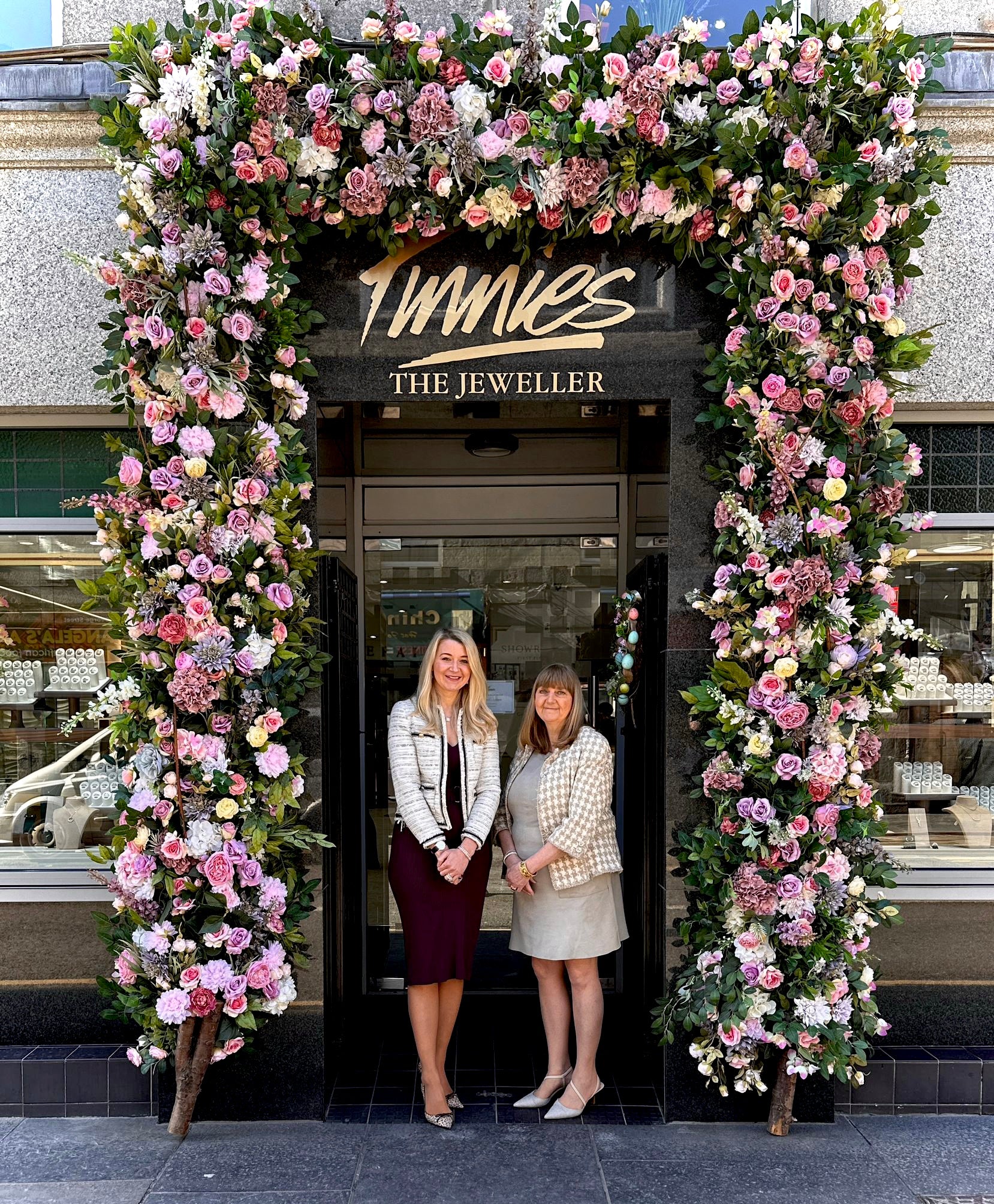
You can discuss ethical provenance, view alloy samples, and explore certified collections with our non-commissioned specialists in our Aberdeen showroom or online.
Frequently Asked Questions
Does ethical gold look, weigh, or wear differently than conventional gold?
No. Ethical gold shares the identical chemical structure, specific gravity, and physical durability of conventional 18-carat gold. Whether formulated into white, yellow, or rose alloys, the metal contains 750 parts per thousand of pure fine gold. The difference lies entirely in supply chain auditing, environmental protections, and verified labour standards at the point of extraction.
How does Chopard prove that its gold is ethically sourced?
The maison operates closed-loop custody protocols verified by independent audits. Gold enters the production stream through two monitored channels: artisanal and small-scale mines participating in the Swiss Better Gold initiative or Fairmined programmes, and refineries certified by the Responsible Jewellery Council Chain of Custody standards.
Can an independent workshop repair or resize ethical gold jewellery?
Yes. Because 18-carat ethical gold reacts identically at the bench to traditional luxury alloys, master goldsmiths can resize rings, laser-weld joints, reshape settings, and hand-polish surfaces using standard workshop equipment without altering the metal integrity.
What is the difference between Fairmined gold and recycled gold?
Fairmined gold comes from artisanal mining operations that guarantee fair wages, ban child labour, avoid armed conflict, and minimise toxic chemicals like mercury. Recycled gold re-melts existing refined gold from industrial waste or unwanted jewellery, preventing new extraction but offering no direct socio-economic funding to artisanal mining villages.