

 Rings
Rings
 Earrings
 Bracelets & Bangles
 Necklaces & Pendants
 Silver Jewellery


 Our Story
 Diamond Buying Guide
 Watch Buying Guide
 Product Care & Aftercare
 Visit our Showroom
Fine jewellery should be enjoyed every day rather than hidden away in a velvet box. When you wear an 18-carat gold bracelet or ring continuously, however, it encounters skin oils, perfumes, household chemicals, and accidental contact with hard surfaces. Over months of wear, minor neglect can dull the bright reflection of precious metal, cloud diamond facets, and stiffen flexible links.
The expandable designs from Italian goldsmith Fope require a clear care routine because they combine solid 18-carat gold mesh with moving internal components. Unlike solid bangles or plain cast rings, the patented Flex'it system houses dozens of microscopic precious-metal springs within hollow tubular links. Understanding how to clear trapped debris safely, how to handle expandable mesh, and when to consult a bench goldsmith ensures your pieces maintain their spring memory and shine across decades of daily wear.
Safe At-Home Cleaning for Hollow Mesh Links
Because the Novecento weave consists of interlocking tubular gold segments, the primary factor affecting daily performance is cosmetic buildup. Body lotions, hand creams, hair products, and dead skin cells naturally wash into the tiny openings between adjacent links, coating the internal gold springs and creating a film beneath diamond settings.
Cleaning your pieces safely at home takes ten minutes and requires simple household items:
- Step 1: The Warm Water Soak: Fill a small ceramic or glass bowl with lukewarm water. Add two to three drops of mild, fragrance-free liquid dishwashing detergent. Submerge your bracelet, necklace, or ring for ten to fifteen minutes to break down grease and soften hardened cosmetic residue.
- Step 2: Gentle Brushing: Use an ultra-soft baby toothbrush to gently clean the surface. Angle the soft bristles into the crevices between the links and work lightly around diamond-set rondels. Never use stiff-bristled brushes, scrubbing pads, or abrasive pastes, which will create permanent micro-scratches on polished gold.
- Step 3: Thorough Rinsing: Rinse the piece thoroughly under clean, lukewarm running water to wash away all loosened debris and soap scum. Always close the sink basin plug first to prevent accidental loss.
- Step 4: Complete Drying: Pat the jewellery dry using a clean, lint-free microfibre cloth. Leave the piece resting flat on a dry towel for an hour before wearing or storing, allowing moisture inside the hollow links to evaporate completely.
Proper Handling: Protecting the Flex'it Mechanism
The patented 18-carat gold micro-springs inside Flex'it jewellery are engineered for high elastic recovery, but they rely on correct handling to avoid mechanical fatigue.
When putting on a Flex'it bracelet, roll the band gently over your fingertips, palm, and knuckles with an even, continuous motion. Never pull the bracelet open from one side like a rigid hinge, and never yank a single link segment. Pulling unevenly concentrates tensile stress onto two or three individual springs rather than distributing the load around the entire circumference.
The same principle applies to expandable rings. Slide and roll the ring over the knuckle using balanced finger pressure. Avoid twisting the band laterally across the joint, which can torque the interlocking links out of alignment.
Everyday Hazards: Chemicals, Heat, and Physical Stress
Fine 18-carat gold is a resilient noble alloy, but common domestic environments present genuine chemical and physical risks to fine jewellery.
| Hazard Source | Underlying Risk | Recommended Preventive Habit |
|---|---|---|
| Swimming Pools & Hot Tubs | Chlorine and bromine attack alloying metals (copper and silver), causing stress-corrosion cracking in gold wire springs. | Always remove all jewellery before swimming, using saunas, or entering hot tubs. |
| Perfumes & Hair Sprays | Alcohol carriers and aerosol propellants leave stubborn chemical residues that dull gold shine and cloud diamond pavilions. | Follow the traditional rule: jewellery should be the last thing you put on in the morning and the first thing you take off at night. |
| Gym & Heavy Weights | Direct impact against knurled steel barbells can crush hollow gold links and pinch internal spring pathways shut. | Store pieces safely in a fabric pouch before physical training or heavy manual tasks. |
| Domestic Bleach & Cleaners | Harsh chemical agents can react with precious metals and erode the delicate beading holding micro-pavé diamonds in place. | Wear rubber gloves or remove rings and bracelets before cleaning kitchens and bathrooms. |
Storage Principles: Preventing Scratches and Spring Strain
Storing jewellery haphazardly in a dish or drawer is a leading cause of avoidable cosmetic damage. Diamonds rank at 10 on the Mohs mineral hardness scale, while 18-carat gold ranks between 2.5 and 3. If a diamond ring tumbles against a gold bracelet, the stone will score visible gouges into the softer metal.
Store each FOPE piece in its original fabric-lined presentation box or within an individual velvet pouch. If using a multi-compartment jewellery box, ensure pieces sit in separated divisions without touching adjacent metals or stones.
Store Flex'it bracelets and rings in their natural, relaxed resting position. Never store an expandable bracelet stretched around a display cushion that exceeds its resting circumference. Keeping internal springs under constant tension for months at a time can weaken their elastic recovery.
Workshop Servicing: When to Seek Bench Expertise
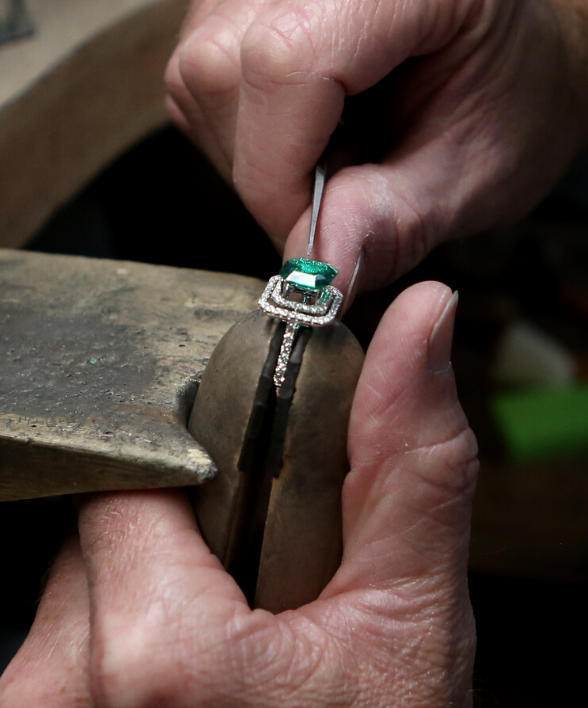
While routine home cleaning keeps your pieces looking fresh, professional bench servicing protects the mechanical integrity of moving gold components over a lifetime.
- Prong and Setting Audits: Master goldsmiths inspect micro-pavé settings under stereo microscopes to confirm that gold beads remain tightly burnished over diamond girdles, catching any movement before a stone is lost.
- Internal Link Decontamination: Workshop ultrasonic and high-pressure steam equipment flushes out compacted cosmetic oils and fine grit from deep within the hollow link chambers without harming the gold temper.
- Spring Replacement and Link Realignment: If a bracelet is accidentally snagged on heavy knitwear and overstretched beyond its elastic limit, our bench goldsmiths can disassemble the damaged section, re-align the woven mesh, and install fresh 18-carat gold micro-springs to restore factory tension.
Our workshop team in Aberdeen provides complimentary inspections, ultrasonic cleaning, and sizing checks so your pieces remain in peak condition.
Frequently Asked Questions
Can I clean my FOPE Flex'it jewellery in an ultrasonic bath at home?
We advise against domestic ultrasonic machines for regular home care. While the 18-carat gold mesh and diamonds tolerate ultrasonic waves, domestic units can vibrate at erratic frequencies that loosen micro-pavé claws without warning. Periodic soaking in warm soapy water with a soft-bristled brush is far safer, reserving ultrasonic cleaning for controlled workshop inspections.
What should I do if my Flex'it bracelet feels stiff or sluggish when expanding?
Sluggish expansion almost always indicates built-up residue inside the hollow link chambers from hand creams, soaps, and dust. A 15-minute soak in warm water with mild dishwashing liquid dissolves accumulated grease and frees the internal gold micro-springs. If stiffness persists, an on-site workshop can inspect the internal link tracks.
Can I wear my FOPE jewellery to bed?
We recommend removing all fine jewellery before sleeping. Rolling over in bed can snag mesh links on bedding fibres, placing lateral twisting strain on the internal springs or catching diamond settings against woven threads.
How often should an independent goldsmith check my FOPE pieces?
A routine annual check is ideal. A bench goldsmith inspects the tension of the internal 18-carat gold micro-springs, evaluates diamond claw seats under a stereo microscope, and cleans out deep-seated residues to preserve structural integrity.