

 Rings
Rings
 Earrings
 Bracelets & Bangles
 Necklaces & Pendants
 Silver Jewellery


 Our Story
 Diamond Buying Guide
 Watch Buying Guide
 Product Care & Aftercare
 Visit our Showroom
Mechanical watchmaking and classic motorsport share a fundamental dependency on structural precision. In historic road rallying, success hinges on measuring small increments of elapsed time against physical distance, where a fractional delay over hundred-mile sectors separates winning teams from the pack. Drivers in open cockpits exposed to engine vibration, rain, and gravel required timing instruments that paired high legibility with durable case engineering.
That mechanical connection forms the core of the Chopard Mille Miglia collection. First introduced in 1988, this chronograph line grew directly from active participation in historic road racing rather than detached sponsorship marketing. Examining the case architecture, dashboard-inspired dials, certified chronometer movements, and rubber tyre treads reveals how classic Italian motorsport continues to shape practical bench horology.
The 1,000-Mile Italian Road Race and Family Heritage
The original Mille Miglia was an open-road endurance race held between 1927 and 1957. Starting in Brescia, cars drove south through the Apennines to Rome, turning north up the Adriatic coast before returning to Brescia along public highways and unpaved mountain roads. Covering approximately 1,000 miles (1,600 kilometres) in a single non-stop sprint, it tested engine resilience, brake longevity, and driver focus under brutal conditions.
In 1977, the event was revived as a historic regularity rally for pre-1957 classic sports cars. Chopard Co-President Karl-Friedrich Scheufele, a passionate vintage car collector and amateur racer, participated in the event during the late 1980s. Recognizing that driver navigation required reliable mechanical chronographs, Chopard formed an official partnership with the Mille Miglia in 1988.
Unlike standard brand ambassador agreements, Karl-Friedrich Scheufele drives in the race annually, regularly accompanied by racing icons like Jacky Ickx. Every competitor receives an exclusive commemorative chronograph before departure, turning the rally into a real-world testing ground for case ergonomics, crown grip, and mechanical shock resistance.
Automotive Translation: Case, Crown, and Pusher Architecture
The Mille Miglia collection separates itself from standard chronographs through direct functional translations of vintage sports car components.
- Piston Pushers: Chronograph start, stop, and reset pushers mirror engine pistons, featuring knurled or grooved perimeter grips that allow drivers to operate timing functions wearing leather driving gloves.
- Fuel Filler Fuel Caps: Large winding crowns echo the machined knurling found on vintage fuel tank caps, making hand-winding tactile and slip-resistant.
- Tachymeter Scales: Bezel rings carry finely graduated tachymeter scales. By stopping the central seconds hand over a measured kilometre course, drivers calculate their exact average speed without computational electronics.
- Box-Section Sapphire Crystals: Raised, glassbox sapphire crystals replicate the domed acrylic windscreens and dashboard gauges of 1950s sports cars, while providing surface hardness rated at 9 on the Mohs scale to resist scratches.
Dashboard Legibility: Dials, Needles, and the Red Arrow
In an open cockpit travelling at high speeds, reading the time must take a fraction of a second. Mille Miglia dials emulate the instrumentation clusters of legendary Italian racing cars like Alfa Romeo, Ferrari, and Maserati.
Sub-dials for running seconds, elapsed 30-minute tallies, and 12-hour counters mirror oil pressure, fuel level, and water temperature indicators. High-contrast typography, matte-finished dial bases, and oversized Arabic numerals finished with Super-LumiNova ensure fast legibility in failing light or dark tunnel passes.
The bright red 1000 Miglia arrow badge, officially licensed from the Automobile Club of Brescia, features prominently on the dial or sapphire case back. Many editions match this logo with bright red central chronograph sweep hands, giving timing readouts immediate visual contrast against dark backgrounds.
Sub-Families: Mille Miglia Classic vs. GTS
Chopard divides the racing line into two distinct branches: the vintage-inspired Classic series and the modern, aggressive Gran Turismo Sport (GTS) series.
| Feature | Mille Miglia Classic Chronograph | Mille Miglia GTS Power Control |
|---|---|---|
| Case Diameter | 40.5mm (Lucent Steel) | 43.0mm (Lucent Steel or DLC-coated) |
| Design Inspiration | 1930s-1950s vintage barchetta race cars | Modern GT endurance racers |
| Dial Complexity | Tri-compax chronograph layout | Three-hand layout with fuel-gauge power reserve |
| Water Resistance | 50 metres (5 bar) | 100 metres (10 bar) with screw-down crown |
| Movement Type | Modular automatic chronograph (COSC certified) | In-house Chopard Calibre 01.08-C (COSC certified) |
| Power Reserve | 54 hours | 60 hours |
The 1968 Dunlop Tyre Strap Innovation
In 1998, Chopard introduced an aesthetic detail that became an industry benchmark: the tyre tread rubber strap. Rather than using generic textured rubber, the workshop acquired the rights to replicate the exact historic tread pattern of the 1968 Dunlop CR65 racing tyre.
This design is not merely decorative. Made from vulcanised natural rubber, the strap provides excellent tensile strength and total resistance to sweat, road grime, and salt water. The deep grooved sipes channel air and moisture away from the skin, preventing heat buildup around the wrist during long periods behind the wheel. The underside features a micro-textured finish that anchors the watch head against sudden physical movement.
COSC Certified Chronometer Precision
Because the original regularity rallies rely on timing checkpoint discipline down to fractions of a second, Chopard submits every mechanical Mille Miglia movement to the Contrôle Officiel Suisse des Chronomètres (COSC).
Over a rigorous 15-day testing sequence, uncased calibres are evaluated in five different physical orientations and at three controlled temperatures: 8, 23, and 38 degrees Celsius. Only movements maintaining an average daily variation between -4 and +6 seconds receive the chronometer certificate. This certification guarantees that whether driving through cold Alpine passes or enduring summer heat, the escapement maintains steady timekeeping.
Workshop Care: Preserving Chronograph Pushers and Case Seals
A multi-function racing chronograph requires attentive workshop maintenance to preserve its mechanical longevity. Because chronographs feature additional case openings for start-stop pushers, moisture ingress poses a genuine risk if seals degrade.
- Pusher Gasket Integrity: Each chronograph button relies on internal O-ring seals to prevent dirt, water, and road spray from entering the movement cavity. These gaskets should be inspected and renewed during regular three- to five-year service intervals.
- Operating Discipline: Never actuate the chronograph pushers when the watch is wet or submerged. Depressing a button underwater forces fluid past the gasket boundary directly onto the steel movement levers.
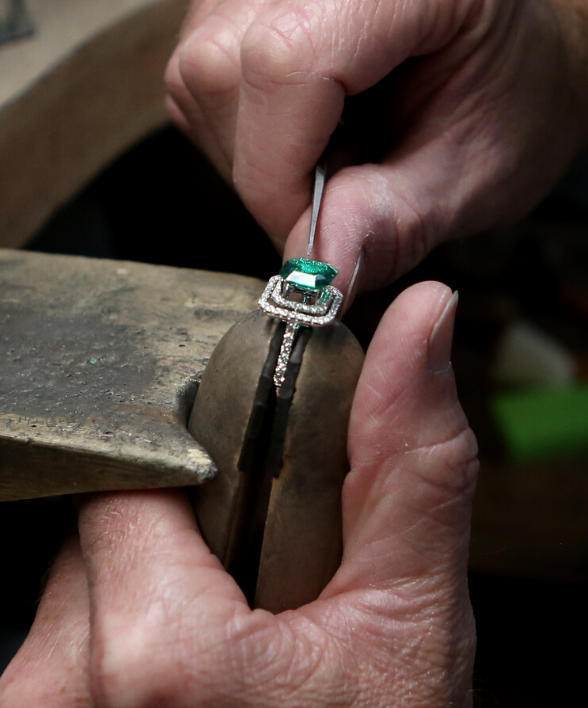
- Magnetism Prevention: Vintage and modern car interiors generate strong magnetic fields from alternator wiring, stereo speakers, and mobile charging pads. Exposure to magnetic sources can magnetise the balance spring, causing the watch to gain several minutes per day. Our bench goldsmiths and watch technicians can demagnetise timepieces in seconds during a routine showroom visit.
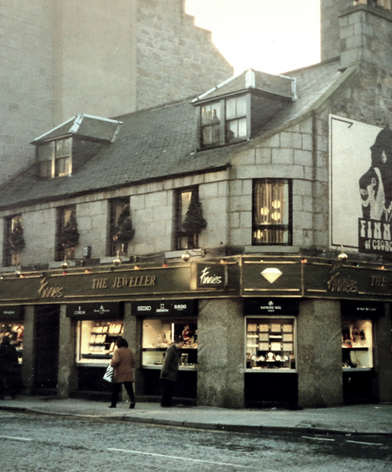
You can discover our curated selection of Mille Miglia chronographs in our Aberdeen showroom or explore the collection online.
Frequently Asked Questions
Why are all Chopard Mille Miglia watches COSC certified?
Historic endurance rallying relies on precise split-second navigation and timing checks over fixed distances. COSC chronometer certification confirms that each mechanical movement operates within an accuracy tolerance of -4 to +6 seconds per day across varying temperatures and positions.
What is the significance of the tyre tread pattern on the strap?
Chopard models the pattern directly on the Dunlop racing tyre tread from the 1960s. The strap uses vulcanised natural rubber that resists perspiration, oils, and moisture during active wear while gripping the wrist securely.
Can I wear a Mille Miglia chronograph in water?
Most standard Mille Miglia Classic chronographs provide water resistance rated to 50 metres, while select GTS models reach 100 metres with screw-down crowns. Chronograph pushers should never be operated underwater, as doing so breaks gasket seals and allows moisture into the movement chamber.
How does a tachymeter bezel calculate average vehicle speed?
Start the chronograph when passing a designated kilometre marker and stop it exactly one kilometre later. The central seconds hand points directly to your average speed in kilometres per hour on the outer bezel scale.