

 Rings
Rings
 Earrings
 Bracelets & Bangles
 Necklaces & Pendants
 Silver Jewellery


 Our Story
 Diamond Buying Guide
 Watch Buying Guide
 Product Care & Aftercare
 Visit our Showroom
Planning the purchase of an engagement ring often comes with conflicting advice. Traditional marketing campaigns have spent decades promoting rigid rules, insisting that buyers spend two or three months of their gross salary on a ring. Meanwhile, internet diamond forums bombard first-time buyers with complex grading charts, suggesting that settling for anything less than a Flawless, D-colour stone compromises the significance of the moment.
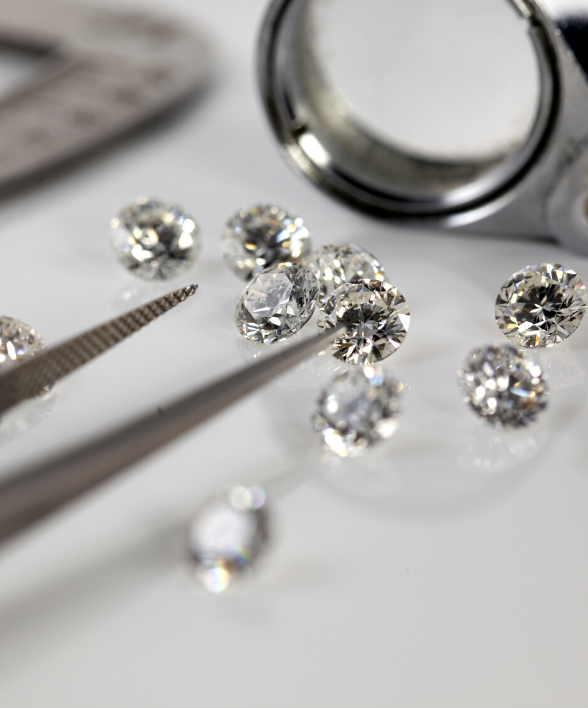
At the goldsmith's bench, fine jewellery is defined by optical performance and enduring metallurgy, not by arbitrary spending formulas or paper perfection. When curating diamonds for engagement rings, our workshop team focuses on visual impact per pound spent. Understanding how the 4Cs—Cut, Colour, Clarity, and Carat Weight—interact mathematically allows you to allocate your budget where the eye can actually see the difference, avoiding expensive laboratory grades that deliver zero perceptible benefit on the hand.
Dismantling the Salary Myth: Setting a Sensible Budget
The notion that an engagement ring must cost a set percentage of an individual's salary originated in the late 1930s as a commercial advertising slogan created to control post-Depression diamond inventories. It has no basis in gemmological science, financial planning, or master bench traditions.
A sensible budget is an absolute figure tailored to your current financial circumstances. The purpose of an engagement ring is to represent a lifelong commitment with a durable, beautiful piece of bench craft—not to create financial stress at the start of a marriage. Once an overall budget figure is determined, the objective is to maximize the physical beauty of the ring by distributing those funds intelligently across stone quality and metal mounting.
The Priority Hierarchy: Where to Spend First
The 4Cs do not carry equal visual weight. Ranking them in order of real-world visibility ensures that funds are assigned to the characteristics that directly govern brilliance.
- Priority 1: Cut Proportions (Non-Negotiable): Cut is the engine of a diamond's sparkle. A stone with Excellent or Ideal cut proportions gathers ambient light through its crown facets, bounces it off internal pavilion mirrors, and reflects it directly back to the eye as crisp white brilliance and spectral fire. A Poor or Fair cut stone leaks light through the bottom, appearing dull and lifeless regardless of its colour or clarity. Cut should absorb your highest proportion of focus.
- Priority 2: Carat Weight (Visible Footprint): Carat weight determines the millimeter spread of the diamond across the finger. Because cut and carat together dictate how large and bright the stone appears, carat weight is the second most noticeable physical attribute on the hand.
- Priority 3: Colour (Near-Colourless Sweet Spot): Rather than paying steep premiums for D, E, or F colourless grades, near-colourless stones (G, H, and I) appear bright white face-up once mounted, freeing significant capital for a larger or better-cut stone.
- Priority 4: Clarity (The Eye-Clean Baseline): Clarity exists to confirm that a stone contains no distracting visible blemishes. Paying for microscopic purity (VVS or Flawless) that can only be resolved under 10x laboratory microscopes yields zero visual return to the naked eye.
Strategic Saving: Maximising the 4Cs on the Hand
Applying gemmological principles allows buyers to extract maximum visual performance from each grade tier.
| Diamond Factor | Common Cost Trap (Overspending) | Strategic Smart-Buy (High Visual Return) | Practical Value Gained |
|---|---|---|---|
| Cut Quality | Downgrading to "Good" or "Fair" to afford a heavier stone | Strictly GIA Excellent or Ideal cut proportions | Guarantees maximum light return, eliminates dark center shadows, and masks faint tints. |
| Carat Weight | Paying the steep premium for round milestones (e.g. 1.00ct or 1.50ct) | Buying "under-size" stones (e.g. 0.90ct to 0.95ct, or 1.40ct) | Saves 15% to 25% on carat pricing while yielding virtually identical millimetre surface spread. |
| Colour Grade | Insisting on D or E "Flawless Colour" on paper | Selecting G, H, or I near-colourless grades | Looks completely white face-up once mounted in platinum or 18ct white gold; zero naked-eye difference. |
| Clarity Grade | Paying for VVS1, VVS2, or Internally Flawless | Vetted VS2 or eye-clean SI1 grades | Zero inclusions visible to the naked human eye; frees up thousands of pounds for cut and spread. |
The "Magic Weights": Avoiding Commercial Pricing Spikes
Diamond trading follows international price benchmarks that rise steeply at specific metric thresholds known in the trade as "magic weights." These milestones sit at full and half-carat marks: 0.50ct, 0.70ct, 1.00ct, 1.50ct, and 2.00ct.
Because retail demand clusters heavily around round numbers, a 1.00-carat diamond commands a disproportionately higher price per carat than a 0.95-carat diamond of the identical colour, clarity, and cut proportions. In physical terms, a properly cut 1.00-carat round brilliant measures roughly 6.50 millimetres in diameter, while an Excellent-cut 0.92-carat stone measures approximately 6.25 millimetres.
On a hand, a difference of a quarter of a millimetre is imperceptible to the human eye, yet selecting the 0.92-carat diamond saves significant budget. That difference can either remain in your savings or be invested in a heavier, hand-crafted platinum or 18-carat gold mount.
Metal Choice as a Budget Balancing Tool
Budget allocation does not end with the loose diamond. The precious metal mount must balance durability with long-term maintenance costs.
- 18ct Yellow or Rose Gold: Warm metal alloys allow you to safely drop to I or J colour diamonds. The warm reflections of yellow or rose gold prongs blend with the subtle body tone of the diamond, making near-colourless stones appear bright and warm without clashing.
- 950 Platinum: Platinum carries a higher initial material investment than white gold due to its high density (specific gravity ~21.45 g/cm³) and 95% purity. However, because platinum is naturally white throughout, it never requires rhodium re-plating baths, eliminating periodic chemical maintenance costs across decades of wear.
- 18ct White Gold: Provides a lower initial purchase threshold than platinum while delivering a crisp, modern finish. Buyers must factor in routine workshop rhodium re-plating every 12 to 24 months to restore the mirror-white sheen as friction reveals the warmer natural gold underneath.
Sample Budget Allocation Models
To visualize how these principles apply at different price tiers, consider three practical allocation frameworks.
The Accessible Baseline (Under £2,500):
- Focus: Maximum sparkle and clean daily wear.
- Allocation: 75% on a certified 0.50ct–0.60ct G/H colour, eye-clean SI1, Excellent cut diamond; 25% on a classic four-prong solitaire mount in 18ct yellow or white gold.
The Balanced Milestone (£3,500 – £6,000):
- Focus: Substantial finger spread with zero compromises on light return.
- Allocation: 75% on an Excellent cut 0.85ct–0.95ct round brilliant (or 1.00ct oval) in G/H colour and eye-clean VS2 clarity; 25% on a 950 platinum wed-fit solitaire or trilogy mount.
The Bespoke Statement (£7,500+):
- Focus: Exceptional carat spread, certified provenance, and fine side-stone architecture.
- Allocation: 70% on a 1.25ct+ GIA-certified diamond with triple Excellent grades; 30% on a custom-cast platinum mount featuring micro-pavé shoulders or hand-cut tapered baguette side stones.
Workshop Guidance: Seeing Value with Your Own Eyes
Certification provides an objective baseline, but real-world value must be verified in person under balanced lighting conditions.
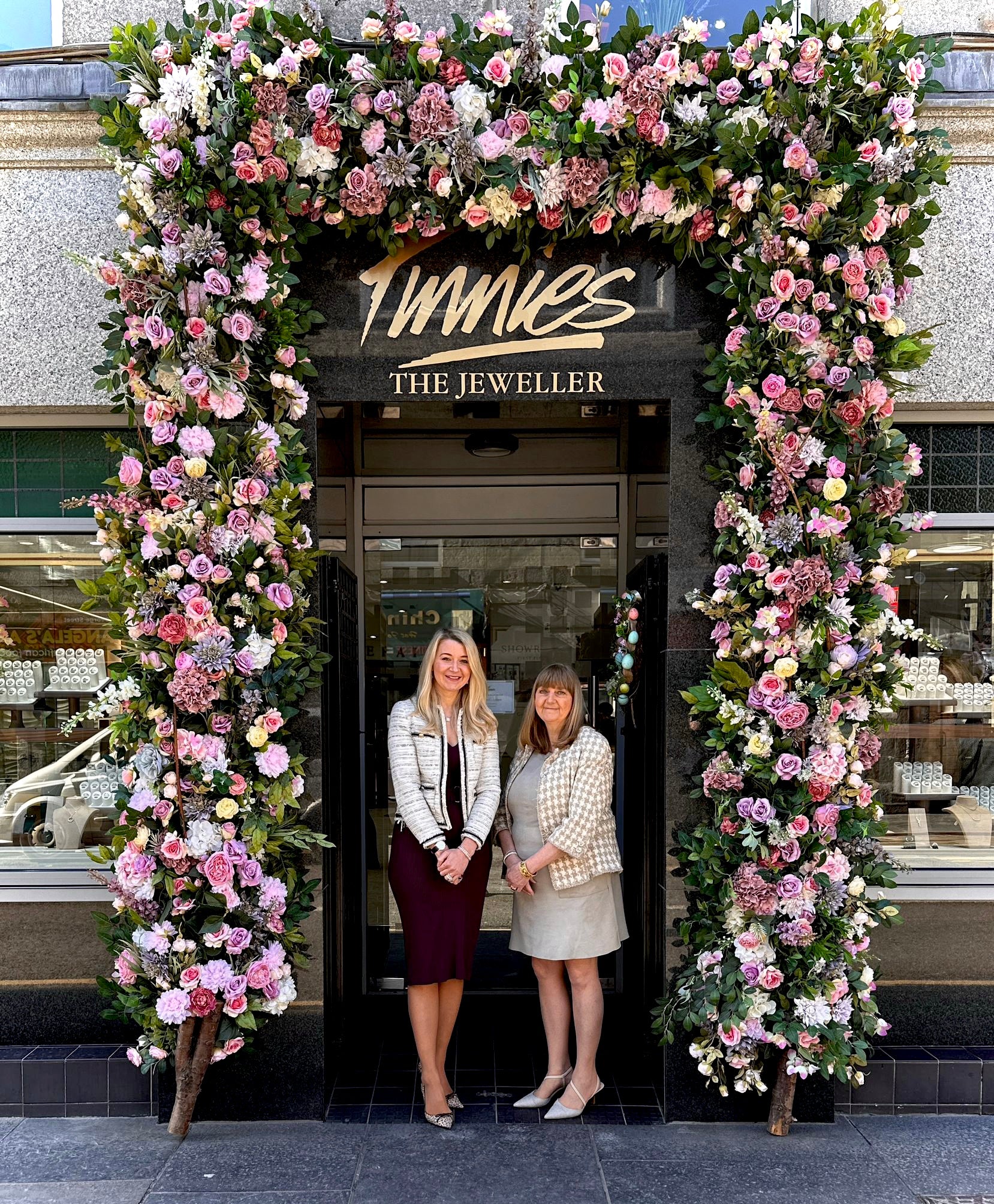
In our Aberdeen showroom, our non-commissioned specialists present diamonds of varying clarity tiers, colour grades, and carat milestones side-by-side on grooved sorting trays. Viewing a D-colour stone directly beside an H-colour stone under natural northern daylight demonstrates how difficult it is to spot colour differences with the naked eye, giving you the confidence to allocate your budget where it delivers tangible visual impact.
You can explore certified diamonds, inspect cut proportions under high magnification, and design custom engagement rings with our master goldsmiths in our Aberdeen showroom or online.
Frequently Asked Questions
Is the old rule of spending two to three months of salary still relevant?
No. The traditional 'three-month salary rule' was an artificial marketing benchmark conceived by commercial diamond cartels in the mid-twentieth century. A sensible engagement ring budget is defined entirely by your personal financial comfort and life goals, not by a fixed percentage of income.
Which of the 4Cs should I never compromise on?
Never compromise on Cut quality. An Excellent or Ideal cut diamond gathers ambient light and reflects it edge-to-edge as white brilliance and spectral fire. A poorly cut stone will appear dull, dark, and smaller on the finger, regardless of whether it carries a flawless clarity grade or colourless rating on paper.
What are 'magic weight' thresholds in diamond pricing?
Diamond prices jump sharply at major whole- and half-carat milestones, such as 0.50ct, 0.70ct, 1.00ct, and 1.50ct. Opting for a stone just beneath these thresholds—such as a 0.90ct to 0.95ct diamond instead of a full 1.00ct—yields an identical visual millimeter spread on the hand while saving between 15% and 25% on raw carat premium.
Can you tell the difference between a D colour and a G colour diamond once set?
To the naked eye, once mounted in platinum or 18-carat white gold, virtually no one can distinguish between a colourless D/E diamond and a near-colourless G/H diamond viewed face-up in natural daylight. The difference is observable primarily when unset stones are viewed upside down against a white card under controlled laboratory lighting.