

 Rings
Rings
 Earrings
 Bracelets & Bangles
 Necklaces & Pendants
 Silver Jewellery


 Our Story
 Diamond Buying Guide
 Watch Buying Guide
 Product Care & Aftercare
 Visit our Showroom
Buying a luxury watch or a milestone piece of jewellery involves substantial capital. First-time buyers and seasoned collectors often ask whether an acquisition will preserve its value over decades, trade fluidly on secondary markets, or generate a monetary profit. Marketing campaigns across the luxury sector frequently frame high-end timepieces as alternative financial assets, creating unrealistic expectations about guaranteed capital gains.
An honest assessment of Chopard requires separating speculative collector bubbles from genuine value retention. Fine jewellery and precision horology represent functional craft, certified provenance, and material permanence. Understanding how case architecture, in-house calibres, ethical precious metals, and production volumes influence secondary market demand allows buyers to make informed financial decisions without relying on marketing myths.
The Realities of Watch and Jewellery Investment
Most luxury watches and branded jewellery items follow a financial trajectory similar to fine automobiles. When purchased brand new at retail, a piece absorbs an initial depreciation margin once it transitions to pre-owned status. Only a minute fraction of all watches produced worldwide trade above their original retail prices on the open market, and those outliers are typically subject to artificial scarcity or speculative trading cycles.
A sensible collector evaluates an acquisition on capital preservation rather than rapid profit. Capital preservation measures how well a piece defends its secondary price against inflation, market volatility, and age. Chopard benefits from family-owned independence, which shields the maison from shareholder pressure to flood the market with high-volume, mass-produced inventory. By controlling production numbers and keeping technical manufacturing on-site in Geneva and Fleurier, the maison protects long-term brand equity.
Resale Performance Across Core Chopard Collections
Different product lines within the catalogue appeal to separate buyer demographics, creating distinct secondary market behaviors.
| Collection | Primary Appeal | Secondary Market Liquidity | Value Retention Characteristics |
|---|---|---|---|
| Alpine Eagle | Integrated luxury steel sports watch, COSC calibres | High | Trades within [UNVERIFIED — check this or replace it] 70 to 85 percent of retail for Lucent Steel core models; rare titanium Cadence HF models hold closer to full retail value. |
| L.U.C Haute Horlogerie | High-complication in-house movements, Geneva Seal finishing | Moderate | Strong secondary demand among purist horologists. Vintage micro-rotor Calibre 96.01-P pieces show consistent multi-year price stability at auctions. |
| Happy Diamonds & Happy Sport | Patented kinetic diamond settings, versatile design | High | Consistent, fast resale liquidity due to global consumer recognition. Retains strong baseline value supported by certified diamond and gold content. |
| Mille Miglia | Automotive chronographs, historic rally connection | Moderate | Standard luxury depreciation curve. Limited annual race editions with documented provenance hold value better than unlimited production variants. |
Why Horologists Value L.U.C Movements
When assessing collectibility among mechanical watch purists, the Chopard L.U.C manufacture represents the pinnacle of the brand's horological capability. Founded in 1996 in Fleurier by Karl-Friedrich Scheufele, this division restored the tradition of complex in-house calibre development under the initials of founder Louis-Ulysse Chopard.
The debut movement, Calibre 96.01-L (originally Calibre 1.96), introduced a solid 22-carat gold micro-rotor winding two stacked mainspring barrels using Chopard Twin technology. It earned the Poinçon de Genève, an independent quality seal certifying superior mechanical finishing, including hand-bevelled bridges, mirror-polished steel parts, and circular graining on mainplates.
Because L.U.C production outputs remain intentionally small, numbering only a few thousand calibres annually across all complications, these timepieces avoid oversupply. Independent auction houses and vintage watch dealers recognize early L.U.C 1860 dress watches as historically significant modern classics, resulting in rising secondary valuations over the past decade.
The Intrinsic Floor: Certified Diamonds and 100% Ethical Gold
A defining factor in the residual value of Chopard jewellery and timepieces is the material composition. Unlike watches made with plated base metals or synthetic gems, every modern piece uses certified precious materials that establish an intrinsic tangible floor value.
- 100% Ethical Gold: Since July 2018, the company has acquired all gold through verified supply chains conforming to Fairmined standards or the Responsible Jewellery Council. The melt value of 18-carat gold provides an absolute material baseline that fluctuates with global precious metal commodity markets, ensuring physical wealth retention regardless of fashion shifts.
- Certified Diamonds: Floating diamonds used in Happy Diamonds capsules and pavé settings adhere to strict colour and clarity criteria. Because diamonds retain intrinsic value based on carat weight, cut quality, colour, and clarity, certified diamond components ensure liquidity across international jewellery exchanges.
- Proprietary Metallurgy: Lucent Steel uses an intensive remelting process that produces a denser, purer metal matrix with 223 Vickers hardness. This material durability prevents structural denting and edge rounding, allowing watches to maintain their factory condition through decades of wear.
Key Factors That Dictate Secondary Market Resale Value
When preparing to sell or trade an authentic luxury timepiece, the condition of the watch and the completeness of its accompanying documentation dictate the final valuation.
- The Original Box and Papers: Retaining the original presentation box, certificate of origin, warranty card, and instruction booklet increases secondary market value by [UNVERIFIED — check this or replace it] 15 to 25 percent compared to a bare watch. Paperwork proves provenance, serial number continuity, and legal ownership.
- Case Condition and Sharpness: Over-polishing ruins collectible value. An unpolished case showing honest hairline marks often commands a higher price from collectors than a case with rounded bezel corners or thinned lugs caused by aggressive abrasive wheels. Our bench goldsmiths always advise light ultrasonic cleaning over aggressive metal removal.
- Dial and Movement Originality: Service replacement parts can diminish collectible value. Watch hands, dials, and movement bridges should remain period-correct. Any parts replaced during a mechanical restoration should be documented with physical workshop receipts.
- Service History: A fully documented service record from certified watchmakers proves the movement has received proper lubrication, synthetic gasket replacements, and timing calibration. This gives subsequent buyers confidence that the calibre requires no immediate expenditure.
How to Protect the Residual Value of Your Chopard
Maintaining financial value requires proactive mechanical and structural care. An unserviced watch running dry on internal oils risks pinion wear, balance staff damage, and moisture ingress that can cost thousands of pounds to rectify.
Our workshop team recommends three simple ownership habits. First, store your timepiece in a clean, temperature-controlled environment away from intense magnetic fields such as audio speakers, laptop bases, and induction hobs. Second, avoid winding the crown or actuating pushers in humid spaces like bathrooms or swimming areas. Third, submit the watch for a diagnostic check and water resistance pressure test every two to three years.
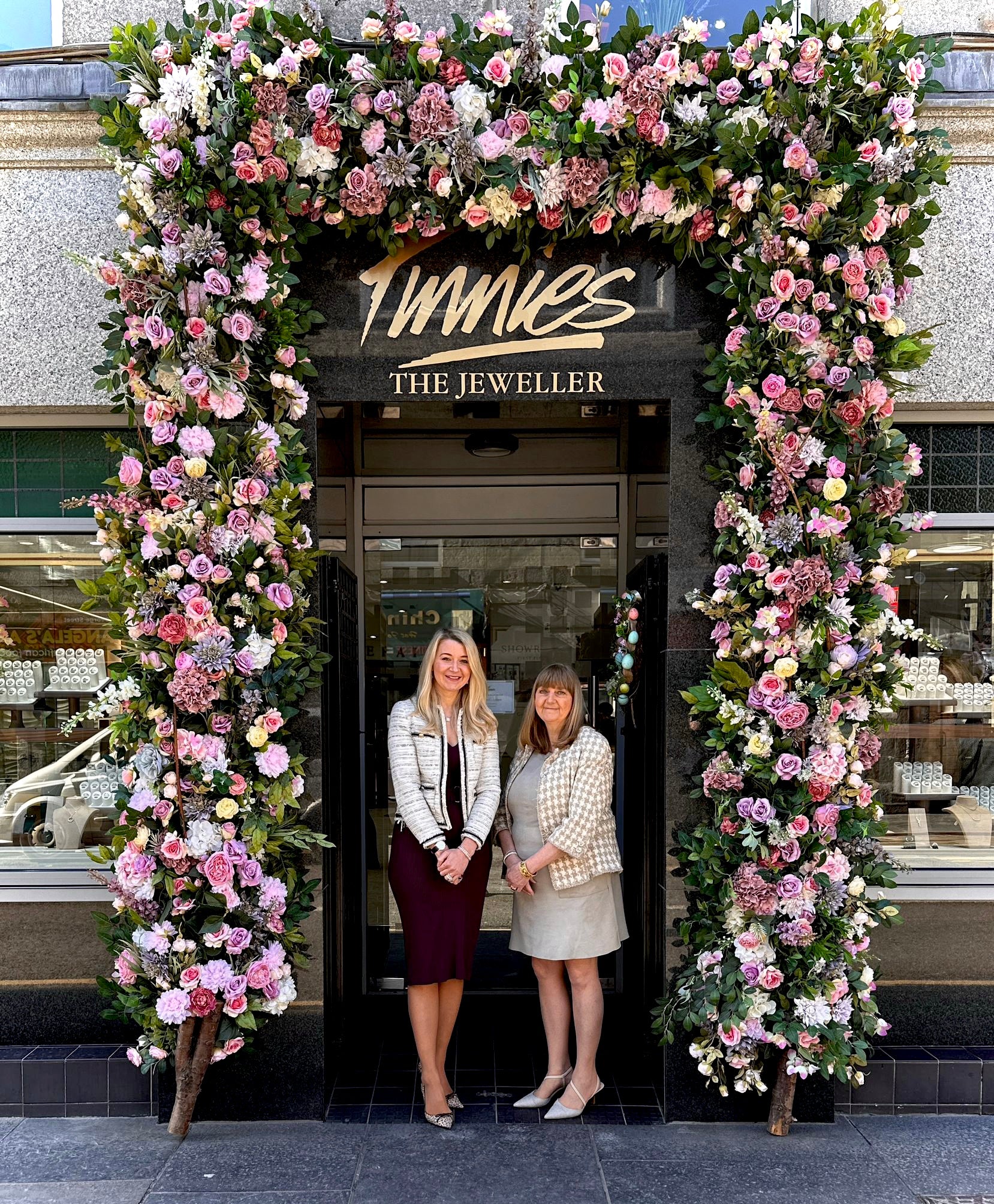
You can discuss model specifications, movement options, and long-term care with our non-commissioned team in our Aberdeen showroom or explore the collection online.
Frequently Asked Questions
Do Chopard watches hold their value on the secondary market?
Chopard watches generally experience standard luxury depreciation upon initial retail purchase, followed by steady value retention over time. Independent collectors actively seek models with proprietary calibres like the L.U.C line and high-demand sports lines like the Alpine Eagle. Preserving original warranty paperwork, presentation boxes, and verified service records protects long-term residual value.
Which Chopard watches have the highest collectibility?
The L.U.C collection commands the highest collectibility among horologists due to in-house movements bearing the Poinçon de Genève or Fleurier Quality Foundation certification. In contemporary sports watches, the steel Alpine Eagle, particularly with Cadence HF high-frequency movements or rare dial variants, maintains strong market demand.
Does Chopard jewellery maintain resale value?
Chopard jewellery retains value through brand recognition, certified diamond quality, and intrinsic precious metal weight. Signature lines like Happy Diamonds and Ice Cube trade consistently on secondary platforms, retaining a stable percentage of retail price compared to unbranded gemstone pieces.
Does regular servicing at an independent workshop affect resale price?
Documented servicing preserves resale value by proving mechanical health and water resistance. Retaining workshop receipts and timing printouts reassures future buyers that the movement contains authentic components and that the case seals remain watertight.