

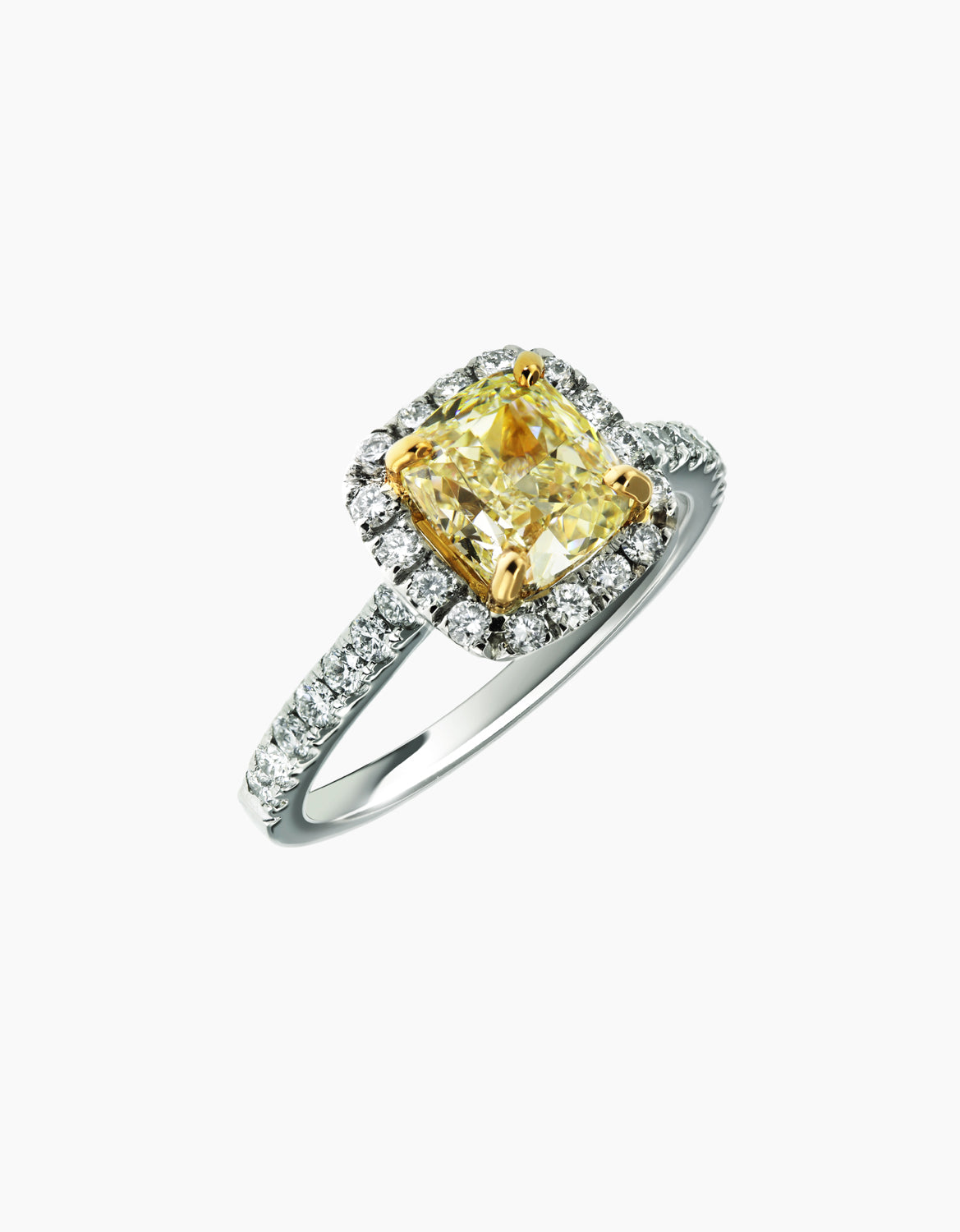
 Rings
Rings
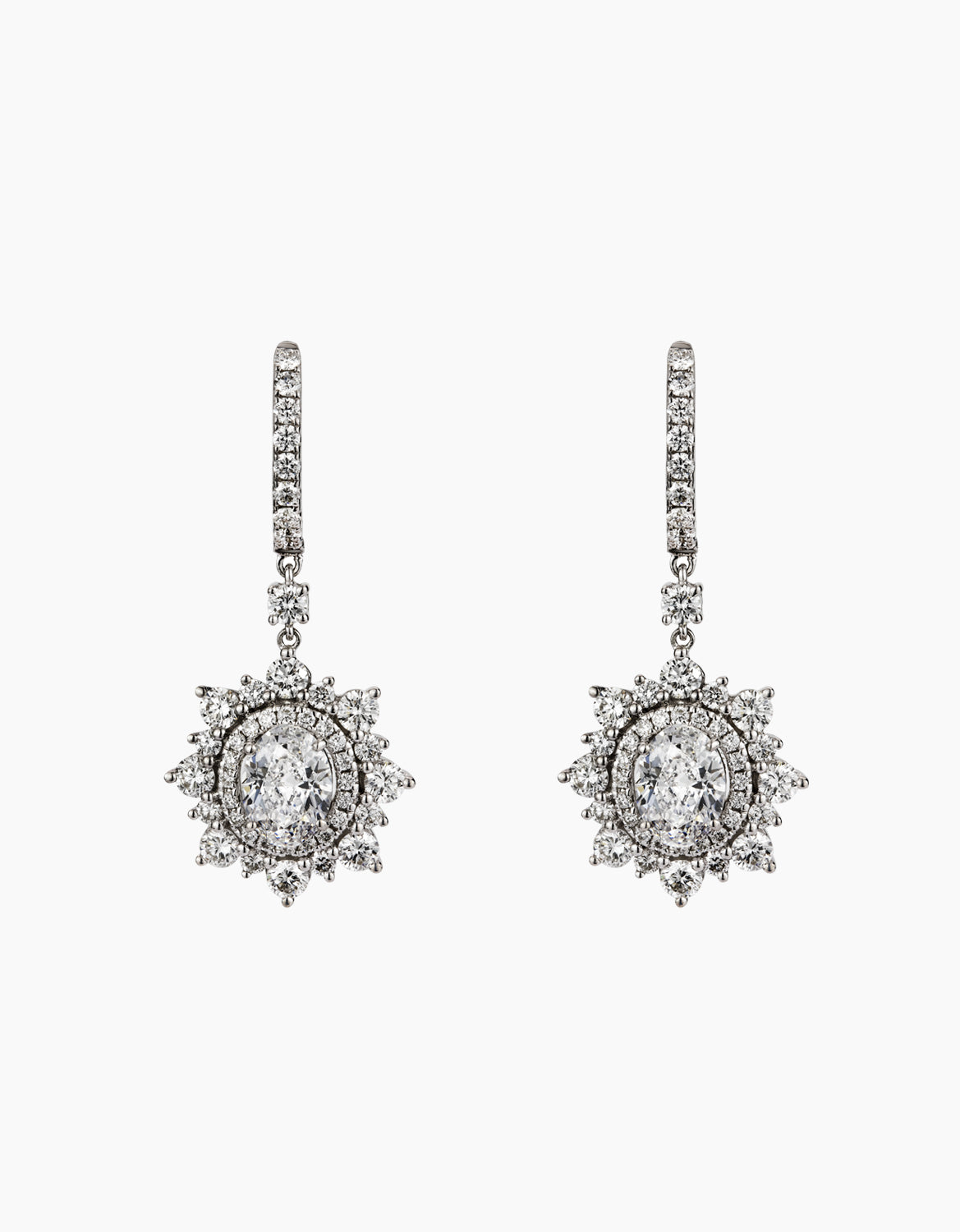 Earrings
 Bracelets & Bangles
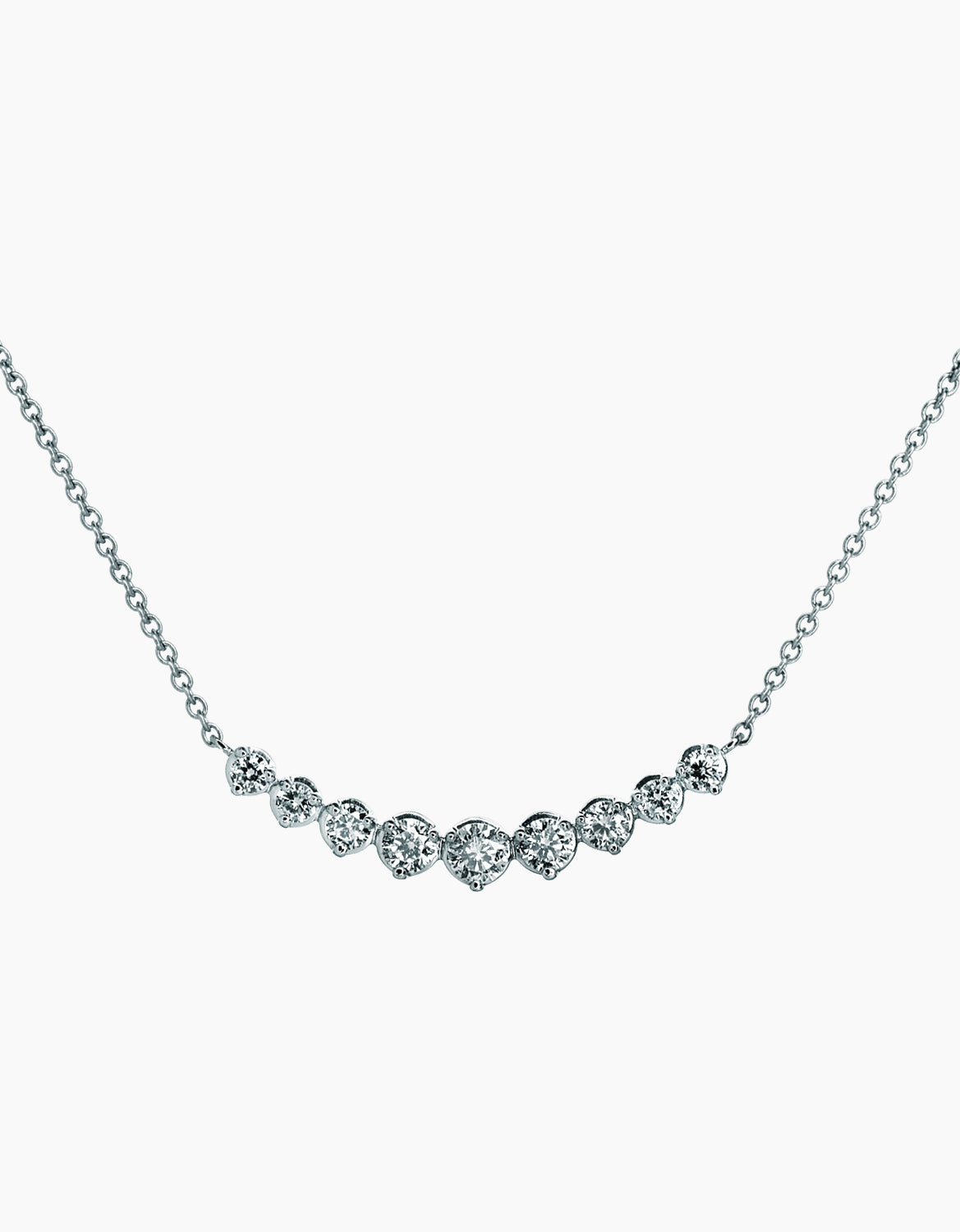 Necklaces & Pendants
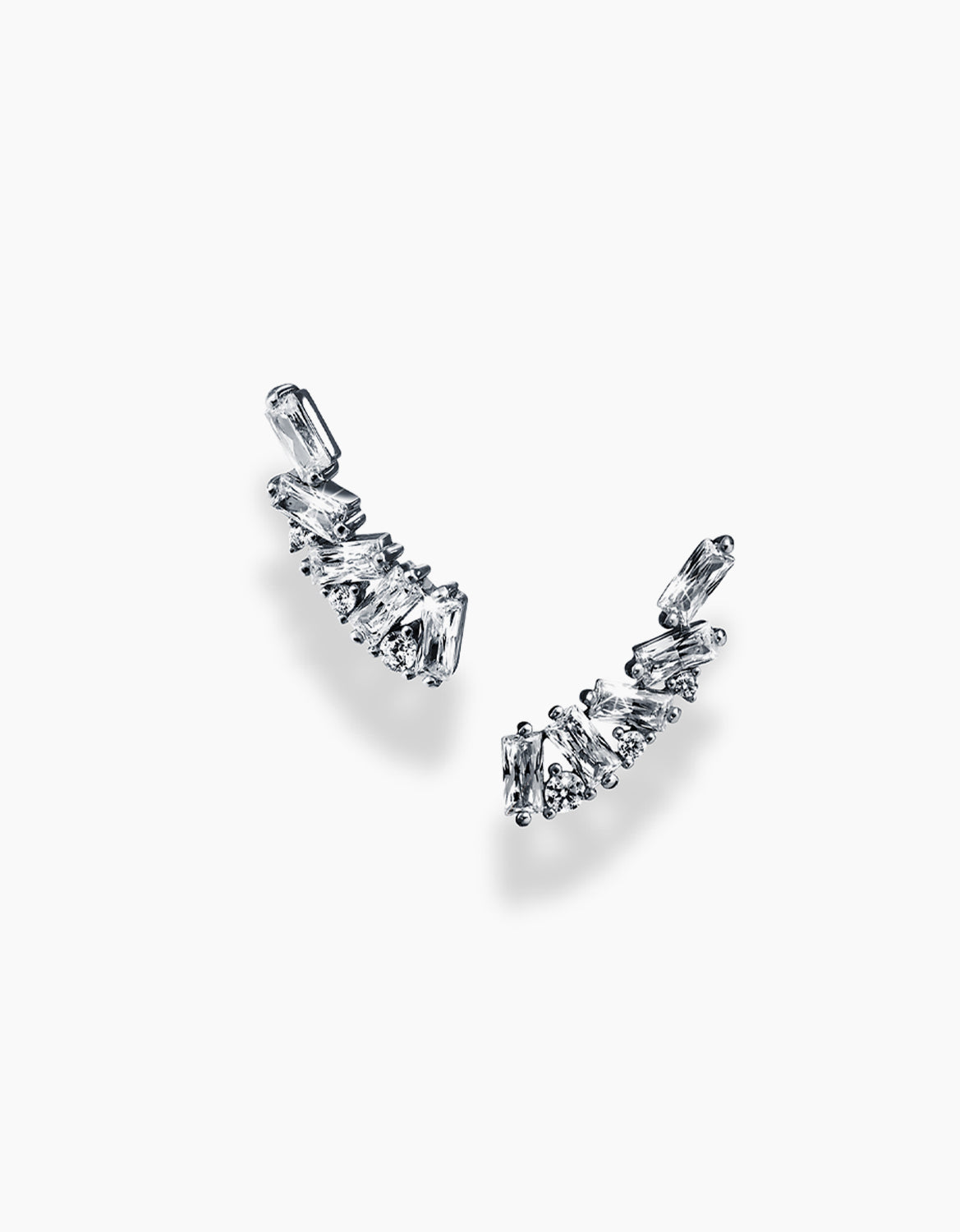 Silver Jewellery


 Our Story
 Diamond Buying Guide
 Watch Buying Guide
 Product Care & Aftercare
 Visit our Showroom
Fine jewellery often relies on serial casting and modular production, where components are assembled from pre-formed settings to maintain uniform profiles. In contrast, High Jewellery operates entirely at the custom bench level. In this sphere, a design does not begin with an established metal chassis. It begins with an exceptional, unrepeatable natural gemstone, around which goldsmiths, lapidaries, and gem-setters construct a dedicated architectural framework by hand.
Within the Geneva workshops of Chopard, High Jewellery represents the convergence of over thirty distinct artisanal trades. Known globally through the annual Red Carpet collections unveiled at the Cannes Film Festival, these creations demonstrate how advanced metallurgy, lost-wax carving, and micro-pavé gem-setting solve structural challenges in one-of-a-kind masterworks. Understanding how these pieces are engineered from raw mineral rough into articulated adornments demystifies the bench craft behind Haute Joaillerie.
The Anatomy of a High Jewellery Atelier
Behind the finished pieces seen on international stages lies an integrated workshop structure in Meyrin, Geneva. Rather than outsourcing separate fabrication steps to anonymous external contractors, the maison brings every phase of production under one roof. This structural proximity allows bench goldsmiths, stone setters, and polishers to work in continuous consultation as a piece takes shape.
- The Draughtsman and Designer: Translates initial conceptual briefs into precise technical gouache paintings rendered at a 1:1 scale, indicating metal thickness, stone cuts, and articulation joints.
- The Wax Modeller: Carves three-dimensional physical prototypes by hand from specialized jeweller's wax, testing stone depths, weight distribution, and collar curvature against human anatomy.
- The Master Goldsmith: Casts the framework in 18-carat ethical gold or machines it from aerospace-grade titanium, piercing out the under-gallery to allow maximum light entry beneath stone pavilions.
- The Lapidary: Custom-cuts and polishes individual diamonds and coloured gems to fit curved metal channels and microscopic bezel seats.
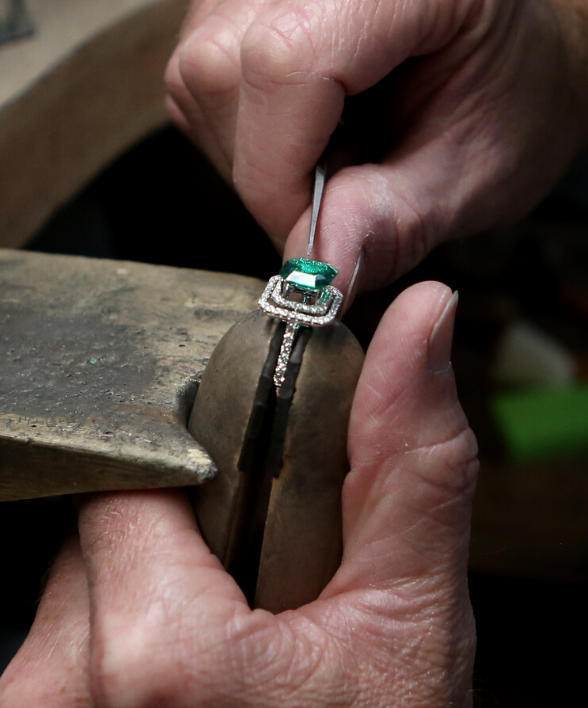
- The Gem-Setter (Sertisseur): Secures each stone into metal seats using hardened steel gravers under 40x magnification, balancing secure stone retention against minimal metal visibility.
- The Polisher: Uses cotton threads, stiff brushes, and fine diamond pastes to smooth every interior wire and reverse joint without rounding sharp faceted corners.
Gem-Setting Disciplines: Securing Stones with Invisible Mechanics
A central technical goal of modern High Jewellery is making structural metal disappear, leaving only continuous surfaces of mineral colour. Master setters rely on several specialized methods to balance physical security with maximum light transmission.
| Setting Method | Mechanical Execution | Visual Outcome & Light Return |
|---|---|---|
| Micro-Pavé Setting | Goldsmiths drill micro-seats into solid metal and raise tiny beads of gold over adjacent stone girdles using handheld beading tools. | Creates an uninterrupted carpet of light; diamonds sit shoulder-to-shoulder with negligible metal visible between facets. |
| Claw / Prong Setting | Individual wire prongs are notched, bent over the crown facets, and rounded down to secure large solitaire gems. | Exposes stone pavilions and flanks to direct ambient light, maximizing refraction and dispersion across large central carats. |
| Invisible Setting | Lapidaries cut fine horizontal grooves beneath the girdle of each stone; gems slide into hidden interior T-rails concealed below. | Leaves no metal visible between stones; surfaces appear as unbroken mosaic tiles of saturated ruby, sapphire, or emerald. |
| Bezel Setting | A continuous collar of precious metal is burnished entirely around the stone perimeter. | Provides superior physical protection for fragile gems, locking edges against impact during active movement. |
The Lost-Wax Process: Turning Plasticine into Solid Metal
Every High Jewellery piece with complex curves begins as a three-dimensional wax sculpture. Before gold is poured, the wax modeller sculpts a tangible prototype using carving waxes and plasticine. This step allows the bench team to confirm that a necklace articulates naturally across the collarbone or that a ring shank clears the knuckle during hand closure.
Once approved, the wax sculpture is attached to a central wax tree and enclosed within a steel flask filled with liquid investment plaster. The flask is placed into an industrial burnout kiln reaching over 700 degrees Celsius, vaporizing the wax completely and leaving an exact negative void inside the hardened plaster.
Molten 18-carat ethical gold, melted on-site in the maison's internal foundry, is forced into the void using vacuum-assisted centrifugal casting machines. Once cooled, the plaster is washed away with pressurized water, revealing the raw metal casting. Goldsmiths spend dozens of bench hours sawing off sprues, cleaning casting seams, and refining pierced openwork using hand files and needle saws.
Metallurgical Innovation: Anodised Titanium in Haute Joaillerie
While 18-carat ethical gold remains the foundation of traditional fine jewellery, it carries a practical limitation: density. Large parures, multi-tier chandelier earrings, and sculpted cuffs cast entirely in solid gold can become heavy and uncomfortable when worn for hours.
To overcome this weight barrier, Chopard pioneered the structural integration of titanium into its High Jewellery lines. Titanium offers high tensile strength while weighing roughly one-third as much as gold. This physical lightness enables artisans to build monumental floral brooches and wide collar necklaces that remain wearable on delicate fabrics.
Titanium also allows for electrolytic anodisation. By submerging clean titanium components in an electrolyte bath and applying controlled electrical voltage, craftsmen alter the surface oxide layer to produce specific interference colours without paints or chemical dyes. Goldsmiths can anodise titanium frameworks into saturated cobalt blues, emerald greens, deep purples, and rich magentas that match the exact body color of adjacent sapphires, tourmalines, or tanzanites. The setting framework blends seamlessly into the gemstones it supports.
Exceptional Gemstone Provenance: The Garden of Kalahari
A defining milestone illustrating the maison's High Jewellery capabilities occurred with the acquisition of The Queen of Kalahari, a 342-carat rough diamond of D colour and Flawless clarity discovered in the Karowe mine in Botswana.
Rather than cutting the rough crystal into a single monumental stone, Caroline Scheufele and the Geneva cutting teams spent a full year studying the stone's internal crystal lattice. The workshop cut the 342-carat rough into a set of 23 exceptional diamonds, five of which weighed over 20 carats each, representing the principal diamond shapes: cushion, brilliant, heart, emerald, and pear.
The resulting six-piece set, known as The Garden of Kalahari, demonstrated modular bench mechanics. The centrepiece necklace incorporates hidden mechanical bayonet catches, allowing the wearer to attach or detach three large diamond pendants (a 50-carat brilliant cut, a 26-carat heart shape, and a 25-carat pear shape) depending on the formal occasion. This transformable engineering exemplifies how high-jewellery mechanics merge aesthetic presence with functional wearability.
Bench Care and Independent Workshop Maintenance
High Jewellery pieces require careful periodic inspection by experienced goldsmiths to ensure stones remain firmly seated in their mountings. Daily movement and accidental impacts can loosen delicate claw settings over time.
- Prong and Beading Audits: Bench goldsmiths examine every claw and micro-bead under stereo-microscopes to detect hair-thin bends, wear facets, or gaps between the metal seat and the gemstone girdle.
- Ultrasonic Cautions: While solid diamonds, sapphires, and rubies tolerate ultrasonic cleaning baths, softer or included gemstones such as emeralds, opals, and tanzanites must never enter ultrasonic tanks. High-frequency sound waves can shatter delicate crystal inclusions or strip protective cedar oils from emerald fractures. These pieces must be cleaned by hand using soft camel-hair brushes and lukewarm soapy water.
- Articulated Joint Lubrication: Multi-link chokers and bracelets rely on hidden gold hinge pins. Goldsmiths clean out pocket dust and dead skin cells that build up inside hinge cavities, ensuring the piece drapes smoothly across the body without stiffening.
You can discuss custom jewellery design, diamond selection, and workshop maintenance with our non-commissioned team in our Aberdeen showroom or explore the collection online.
Frequently Asked Questions
What defines a piece as High Jewellery rather than fine jewellery?
Fine jewellery typically involves curated production runs of standard designs using precious metals and certified stones. High Jewellery refers to unique, one-of-a-kind masterpieces or extremely limited parures built around exceptional collector-grade gemstones, requiring hundreds of hours of individual bench work, wax carving, and custom gem-setting.
Why does Chopard use titanium in High Jewellery alongside ethical gold?
Titanium weighs approximately one-third the weight of gold, allowing master goldsmiths to build expansive, statement earrings, wide cuffs, and multi-tier chokers that remain comfortable on the wearer. Titanium can also be anodised into custom shades that match the exact body color of surrounding gemstones.
How are stones held securely in invisible settings?
In invisible settings, lapidaries cut microscopic grooves into the pavilion facets below the girdle of each gemstone. The stones are then slid horizontally onto hidden metal T-rails concealed beneath the setting plane, eliminating visible prongs and channel edges.
Can an independent workshop clean or check High Jewellery pieces?
Yes. Independent bench goldsmiths inspect prong tension, check stone seats under microscopes, and perform ultrasonic or steam cleanings suited to the specific hardness and porosity of the mounted minerals.