

 Rings
Rings
 Earrings
 Bracelets & Bangles
 Necklaces & Pendants
 Silver Jewellery


 Our Story
 Diamond Buying Guide
 Watch Buying Guide
 Product Care & Aftercare
 Visit our Showroom
How do traditional Italian jewellery-making techniques influence the weight, comfort, and finish of Gucci luxury bracelets and rings?
When you slip a fine ring onto your finger or clasp a luxury bracelet around your wrist, your senses register something far deeper than mere visual design. You immediately notice the physical presence: the reassuring heft of the metal, the soothing glide against your skin, and the liquid-like reflection of polished gold or silver. In the world of fine jewellery, these physical sensations are never accidental. While Gucci is celebrated worldwide as a powerhouse of modern fashion and bold creative vision, its fine jewellery collections owe their tactile grace to centuries of bench-side artisanry. Exploring an authoritative Gucci jewellery guide reveals that beneath the iconic motifs like the Horsebit, the Interlocking G, and the Link to Love lies a foundation built upon regional Italian goldsmithing traditions.
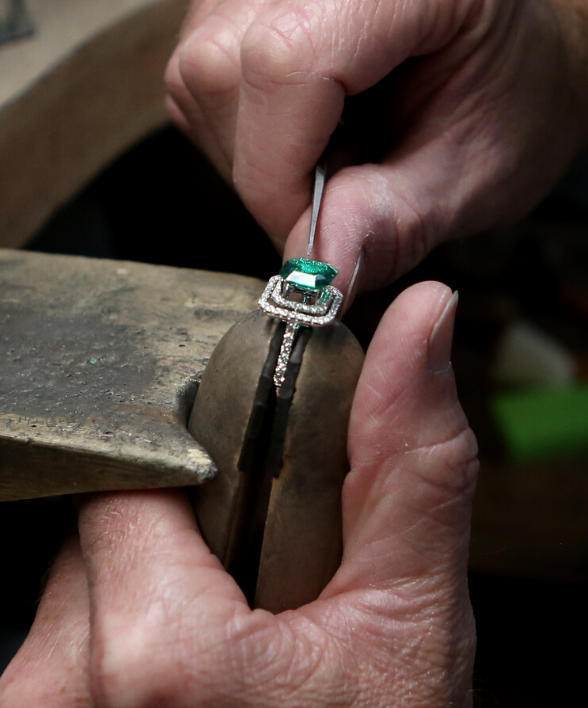
Italy has been the beating heart of European jewellery fabrication since the Etruscan era. Long before high-tech computer modelling or automated production lines existed, multi-generational workshops across northern and central Italy developed bespoke methods to cast, carve, articulate, and polish precious metals. When applied to modern Gucci bracelets and rings, these traditional techniques transform striking conceptual art into wearable heirlooms. Understanding how Italian master goldsmiths control weight, engineer ergonomic comfort, and achieve flawless surface finishes offers an enchanting perspective on what separates genuine luxury from mass-produced ornament.
The Regional DNA of Italian Goldsmithing Behind Gucci
To appreciate how Gucci jewellery achieves its distinctive feel, one must look at the geography of Italian craftsmanship. Rather than concentrating production in a single industrial hub, Italy’s jewellery trade developed across distinct regional clusters, each mastering a specific facet of metalwork:
- Valenza: Revered as the capital of high jewellery, Valenza is renowned for complex assembly, micro-fusion casting, and world-class gemstone setting. The artisans here treat gold like haute couture fabric, ensuring that intricate structures remain durable yet visually delicate.
- Vicenza: Known globally for chainmaking, hollow gold engineering, and volumetric design, Vicenza’s smiths mastered the art of making bold jewellery that commands visual space without feeling uncomfortably heavy.
- Arezzo: A powerhouse of precision casting, stamping, and sterling silver craftsmanship, Arezzo combines classical hand-finishing with impeccable structural repeatability.
Gucci draws directly upon these storied workshops. By combining high-fashion design briefs from Milan and Florence with the specialized bench knowledge of Valenza and Vicenza, the house ensures that every piece of jewellery carries an authentic master-goldsmith pedigree.
Mastering Weight: The Architectural Balance of Mass and Portability
There is a common misconception that in luxury jewellery, heavier always means better. While a flimsy, hollow piece immediately feels cheap, an excessively heavy bracelet or ring quickly becomes unwearable. The true sign of traditional Italian goldsmithing is the deliberate mastery of balance: giving a piece satisfying, grounding heft while distributing mass so cleverly that you can wear it from breakfast through to an evening gala without a moment of fatigue.
The Secrets of Canna Vuota (Hollow Tubing)
In substantial statement pieces—such as Gucci’s chunky chain bracelets or bold tubular bangles—craftsmen often utilize a historic Italian technique known as canna vuota, or empty reed tubing. Developed in Vicenza, this demanding process forms curved, hollow gold or silver profiles that retain structural rigidity and visual volume while reducing total mass by up to forty per cent.
Unlike cheap commercial stampings that dent at the slightest bump, traditional canna vuota maintains generous wall thicknesses. It allows a Gucci Horsebit bracelet to project an imposing, sculptural silhouette on the wrist while floating effortlessly against the skin. When examining the physical distinction between precious metals, learning what is the difference in value retention and longevity between 18ct solid gold and sterling silver Gucci jewellery illustrates how metal density directly informs the artisan’s choice between hollow-form engineering and solid casting.
Solid Casting and Structural Counterbalancing
In contrast to hollow bangles, pieces like the Gucci Link to Love rings, Icon bands, and equestrian link bracelets rely on solid micro-fusion casting. An 18-carat gold ring requires a dense, grounding presence. Italian casters achieve this by meticulously calculating sprue placement and cooling rates, eliminating microscopic air bubbles (porosity) within the metal. The result is a compact, uniform density that feels cool and substantial the moment you pick it up.
Furthermore, Italian artisans carefully counterweight top-heavy designs. When a ring features a prominent raised motif, such as an Interlocking G crest or an architectural Horsebit clasp, an ordinary band would constantly swing upside down toward the palm. By gently thickening the base of the shank, the goldsmith creates a low centre of gravity. The ring stays upright, centred gracefully across your knuckle throughout the day.
Engineering Comfort: Why Luxury Must Feel Like a Second Skin
A piece of jewellery can look breathtaking in a display cabinet, but if it pinches, scrapes, or chafes, it will inevitably spend its life locked inside a jewellery box. Italian workshops have spent centuries studying the anatomy of the human hand and wrist, treating ergonomics as an exact engineering discipline.
The Ergonomic "Court Profile" of Gucci Rings
Examine the inner circumference of a Gucci luxury ring, and you will rarely see a flat, sharp interior edge. Instead, Italian makers employ what British and continental jewellers call a court profile (or profilo bombato). The interior of the band is subtly domed, curving gently away from the finger toward the outer edges.
This cambered inner surface provides several vital benefits for daily wear:
- Effortless Gliding: The curved profile glides easily over knuckle joints without scraping delicate skin, making putting the ring on and taking it off entirely painless.
- Reduced Surface Friction: Because only the crest of the inner curve rests continuously against your skin, friction is dramatically reduced. The finger moves naturally without feeling constricted.
- Thermal Tolerance: Fingers naturally expand and contract throughout the day due to temperature changes and activity. A comfort-fit court shape cushions against swelling, preventing that uncomfortable, trapped sensation during hot summer afternoons.
- Moisture Evaporation: The gentle bevel prevents hand soaps and moisture from remaining trapped against the skin, avoiding contact irritation.
Articulated Joints and Fluid Bracelet Drape
When it comes to luxury bracelets, comfort hinges entirely on articulation. If you drape a Gucci Horsebit or Marina chain bracelet over your fingers, it flows almost like silk rather than solid metal. This extraordinary suppleness is achieved through time-honoured multi-axis joint pinning.
Each link is cast independently, hand-reamed to remove micro-burrs, and assembled using calibrated internal pins or interlocking links. Italian bench jewellers test the swing of every individual joint by hand. If a single link catches or feels stiff, it is filed and adjusted at the bench. This careful spacing ensures the bracelet never pinches tiny wrist hairs or catches on fine cashmere knitwear. To see how these physical mechanisms celebrate timeless style, exploring how Gucci incorporates its rich equestrian heritage into the design of its modern jewellery collections demonstrates how historical saddle-tack mechanics were adapted into ultra-comfortable jewellery joints.
The Art of the Finish: From Specular Polishing to Florentine Textures
Surface finish represents the final conversation between the goldsmith and the light. A jewel’s finish determines whether it gleams with fiery radiance, glows with warm subtlety, or carries an antique, weathered character. Gucci’s workshop repertoire spans several historic Italian surface treatments.
Mirror Polishing (Lucidatura a Specchio)
A true mirror finish should reflect light with crystal clarity, completely free from ripples, orange-peel texture, or fuzzy distortions. Achieving this on complex three-dimensional jewellery requires multiple progressive polishing stages handled by master polishers (lucidatori).
Artisans begin with rough abrasive pastes like Tripoli to level casting skin, gradually progressing to ultra-fine red jeweller’s rouge applied on spinning muslin mops. The real skill lies in maintaining absolute edge sharpness. An inexperienced polisher will round off crisp architectural corners and wash out engraved Gucci logos. An Italian master polisher applies just enough micro-pressure to produce a mirror sheen while keeping every geometric ridge, bevel, and facet knife-sharp.
Hand-Chamfering (Smussatura)
Even though the aesthetic lines of modern Gucci collections—like the geometric Link to Love collection—appear sharp and crisp, they never feel razor-like to the touch. This balance is achieved through smussatura, or hand-chamfering. Goldsmiths run miniature burnishing tools or fine escapement files along the microscopic 90-degree corners of every band and link, imparting an invisible micro-bevel. The eye still perceives a dramatic, architectural edge, but the fingertips experience only smooth, silky metal.
Engraving, Guilloché, and Florentine Florentina
Beyond mirror-polished surfaces, Italian workshops are celebrated for their hand-textured effects:
| Technique | Artisanal Process | Sensory & Visual Impact |
|---|---|---|
| Guilloché | Mechanical engine-turning cutting repetitive micro-grooves into solid gold. | Creates shimmering optical wave patterns that play hypnotically under sunlight. |
| Florentine Finish | Hand-graving cross-hatched micro-striations across the metal surface. | Produces a silky, matte-cloth texture that softens glare and resists visible scratches. |
| Controlled Oxidation | Chemical sulphur treatment on sterling silver, followed by selective relief polishing. | Darkens recessed engraving (as seen in GG Marmont), imparting dramatic antique depth. |
Mechanical Integrity: Clasps, Hinges, and Daily Longevity
The measure of a luxury bracelet or ring is not merely how it looks on the day of purchase, but how securely and reliably it functions after a decade of continuous wear. The clasps and moving mechanisms on Gucci bracelets reflect the finest traditions of Italian micro-engineering.
Consider the clasps integrated into Gucci’s solid cuffs and heavy chain bracelets. Rather than relying on fragile, generic lobster clasps, Italian workshops build bespoke box clasps and tongue mechanisms directly into the jewellery’s decorative motif. The tongue is cut from work-hardened, spring-tempered gold or silver that retains its elasticity across thousands of opening and closing cycles. When closed, it engages with a distinct, crisp mechanical "click" that assures the wearer it is safely locked in place. Many designs incorporate discreet side figure-eight safety catches, hand-fitted so closely to the link contour that they appear almost invisible when fastened.
Evaluating Craftsmanship at Finnies the Jeweller
When selecting a luxury Gucci bracelet or ring in our Aberdeen showroom at Finnies the Jeweller, we always encourage clients to take their time and evaluate the piece using all their senses. High-resolution photographs can convey styling, but they can never substitute for the tactile reality of handcrafted Italian metalwork.
Here is what our jewellery specialists recommend observing during a fitting:
- The Drape Test: Hold a link bracelet loosely between your fingers and let it collapse onto a velvet display pad. Quality Italian links will fold gracefully into a neat spiral without catching, twisting unnaturally, or snagging.
- The Interior Touch: Close your eyes and run your index finger along the inner shank of a ring or the underbelly of a bracelet cuff. You should feel a smooth, continuous camber without sharp edges or pitted surfaces.
- The Reflection Check: Tilt a mirror-polished band beneath showroom spotlights. The reflected light should glide across the surfaces in a straight, uninterrupted beam. Any waviness suggests rushed machine-polishing rather than expert hand lapping.
- The Sound of Security: Fasten the clasp. Listen for an audible, crisp snap. A fine Italian clasp needs no coaxing or excessive force; it engages with the precise tolerances of a luxury timepiece.
The Lasting Resonance of Italian Bench Craft
Fashion trends inevitably evolve, but the human body’s appreciation for ergonomic comfort and exquisite tactile finish remains unchanged. By anchoring its bold, boundary-pushing designs in the traditional goldsmithing heritage of Valenza, Vicenza, and Arezzo, Gucci elevates its jewellery beyond transient seasonal statements. Every bracelet and ring becomes a harmonious blend of daring contemporary aesthetics and timeless artisanal science. When you invest in a piece of Gucci fine jewellery, you are not merely purchasing an iconic luxury emblem—you are wearing a piece of living Italian craftsmanship engineered to feel as extraordinary on your skin as it looks to the world.